Persistent hip pain can affect almost every part of daily life—from walking and climbing stairs to sitting comfortably or participating in sports. While rest, medication, and physiotherapy may help many people, some hip conditions continue to cause pain despite conservative treatment.
For patients experiencing ongoing symptoms, hip arthroscopy Chandigarh is a minimally invasive surgical option that can help diagnose and treat several problems affecting the hip joint.
What Is Hip Arthroscopy?
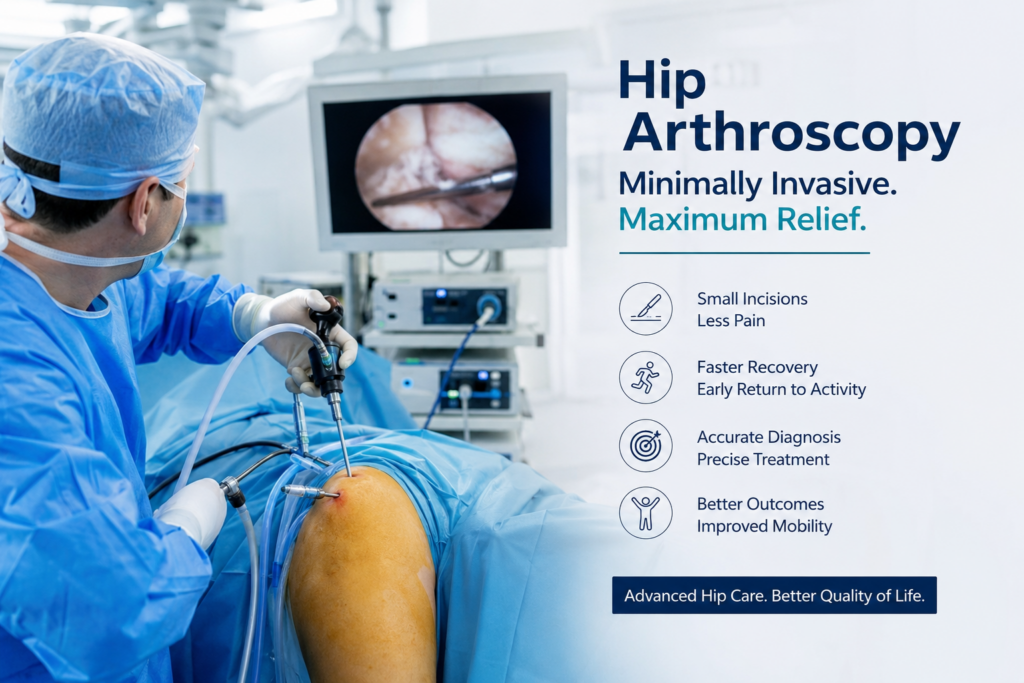
Hip arthroscopy is a minimally invasive procedure that allows an orthopaedic surgeon to examine and treat the inside of the hip joint through small incisions.
During the procedure, a small camera called an arthroscope is inserted into the joint. The camera provides a clear view of the cartilage, labrum, bones, and other structures inside the hip. Special surgical instruments can then be used through additional small incisions to address the underlying problem.
Compared with traditional open surgery, hip arthroscopy generally involves smaller incisions and may allow for a faster recovery in appropriately selected patients.
When Should You Consider Hip Arthroscopy?
Not every case of hip pain requires surgery. However, hip arthroscopy may be considered when persistent symptoms are caused by a structural problem within or around the hip joint and have not improved adequately with non-surgical treatment.
Some conditions that may be treated using hip arthroscopy include:
1. Femoroacetabular Impingement (FAI)
Femoroacetabular impingement occurs when the bones forming the hip joint have an abnormal shape that causes them to rub against each other during certain movements.
This can lead to:
- Pain in the groin or front of the hip
- Stiffness
- Reduced hip movement
- Pain during sports or physical activity
- Difficulty sitting for prolonged periods
Hip arthroscopy can be used to reshape the abnormal bone and address associated damage when appropriate.
2. Hip Labral Tears
The labrum is a ring of cartilage that surrounds the hip socket and contributes to hip stability.
A labral tear may develop because of sports injuries, repetitive movements, structural abnormalities, or trauma. Symptoms can include hip or groin pain, clicking, catching, or a sensation of instability.
Depending on the type and extent of the tear, arthroscopy may allow the surgeon to repair or otherwise treat the damaged labrum.
3. Cartilage Damage
Damage to the cartilage inside the hip can contribute to pain, stiffness, and reduced mobility. In selected cases, arthroscopic treatment may be used to address cartilage-related problems or associated conditions.
The appropriate treatment depends on the location and severity of the cartilage damage and the overall condition of the hip joint.
4. Hip Joint Inflammation and Other Conditions
Certain conditions involving inflamed or damaged tissues around the hip may also be evaluated or treated arthroscopically. A detailed clinical examination and appropriate imaging are important before deciding whether arthroscopy is suitable.
How Can Hip Arthroscopy Help With Persistent Hip Pain?
One of the key benefits of hip arthroscopy is that it can address a specific structural cause of pain rather than simply managing symptoms.
Depending on the underlying diagnosis, treatment may help:
- Reduce hip or groin pain
- Improve range of motion
- Reduce painful clicking or catching
- Improve hip function
- Help patients return to desired activities
- Prevent certain hip problems from progressing
However, outcomes vary from patient to patient. Factors such as the underlying condition, degree of joint damage, age, activity level, and presence of arthritis can influence the expected result.
Why Proper Diagnosis Matters
Persistent hip pain does not always originate from the hip joint itself. Problems involving the lower back, pelvis, muscles, tendons, or nerves can sometimes produce symptoms around the hip.
This is why a proper evaluation is essential before considering surgery.
Your doctor may assess:
- The location and nature of your pain
- Hip movement and flexibility
- Muscle strength
- Previous injuries
- Activity and sports history
- Response to physiotherapy or medication
- X-rays, MRI, or other imaging when required
A specialist can then determine whether your symptoms are likely to benefit from hip arthroscopy or whether another treatment would be more appropriate.
What Happens During Hip Arthroscopy?
Hip arthroscopy is usually performed under anaesthesia. The surgeon makes small incisions around the hip and inserts the arthroscope into the joint.
The procedure may involve:
- Examining the hip joint using the arthroscope.
- Identifying the source of the problem.
- Treating the damaged labrum, cartilage, or other structures as required.
- Correcting abnormal bone growth in selected cases of hip impingement.
- Closing the small incisions after completing the procedure.
The exact surgical technique depends on the patient’s diagnosis and the findings during the procedure.
Recovery After Hip Arthroscopy
Recovery varies according to the procedure performed and the individual’s overall health.
Some patients can begin walking relatively soon after surgery, while others may need temporary support such as crutches. Physiotherapy is commonly an important part of rehabilitation.
A rehabilitation programme may focus on:
- Gradually restoring hip movement
- Improving muscle strength
- Reducing swelling and discomfort
- Improving balance and stability
- Safely returning to work, exercise, or sports
Following the surgeon’s rehabilitation instructions is important for achieving the best possible recovery.
Is Hip Arthroscopy Suitable for Everyone?
Hip arthroscopy is not appropriate for every patient with hip pain.
For example, patients with advanced hip arthritis or significant joint degeneration may benefit more from other treatment options. The decision depends on the condition of the hip joint, the source of pain, symptoms, imaging findings, and the patient’s individual goals.
An experienced orthopaedic evaluation can help determine the most appropriate treatment plan.
When Should You See a Hip Specialist?
You should consider consulting a specialist if hip pain:
- Continues for several weeks
- Interferes with walking or everyday activities
- Gets worse during exercise or sports
- Causes stiffness or restricted movement
- Is associated with clicking, catching, or locking
- Does not improve with rest or conservative treatment
- Keeps returning after temporary improvement
If you are searching for a hip pain specialist Panchkula, consulting an experienced hip specialist can help identify whether your symptoms are coming from the hip joint and whether further investigations are needed.
Choosing the Right Hip Arthroscopy Specialist in Chandigarh
Choosing a surgeon for hip arthroscopy is an important decision. Consider a specialist who has experience in diagnosing and treating hip disorders and who takes the time to explain both surgical and non-surgical options.
During your consultation, you may want to ask:
- What is causing my hip pain?
- Do I need an MRI or other imaging?
- Is hip arthroscopy appropriate for my condition?
- What are the alternatives to surgery?
- What will recovery involve?
- When can I return to normal activities?
- What results can I realistically expect?
A personalised treatment plan can help you make a more informed decision about your care.
Take the Next Step Towards Managing Persistent Hip Pain
Persistent hip pain should not simply be ignored, especially when it affects your mobility, work, sleep, or ability to enjoy physical activities.
Hip arthroscopy Chandigarh can be an effective minimally invasive treatment for selected hip conditions, including femoroacetabular impingement and certain labral injuries. However, the first step is identifying the actual cause of your symptoms.
If you have ongoing hip or groin pain, consult a qualified hip specialist for a thorough assessment and discuss whether hip arthroscopy or another treatment option may be suitable for you.
NAP — Name, Address and Phone
Name: Dr. Sandeep Gupta — Hip & Knee / Orthopaedic & Joint Replacement Surgeon
Primary location: Max Super Speciality Hospital, Phase 6, Sector 65, Mohali, Punjab 160065
Panchkula consultation: House No. 222, Sector 4, Panchkula, Haryana 134112
Phone: +91 98159 33514
Email: contact@cojri.com