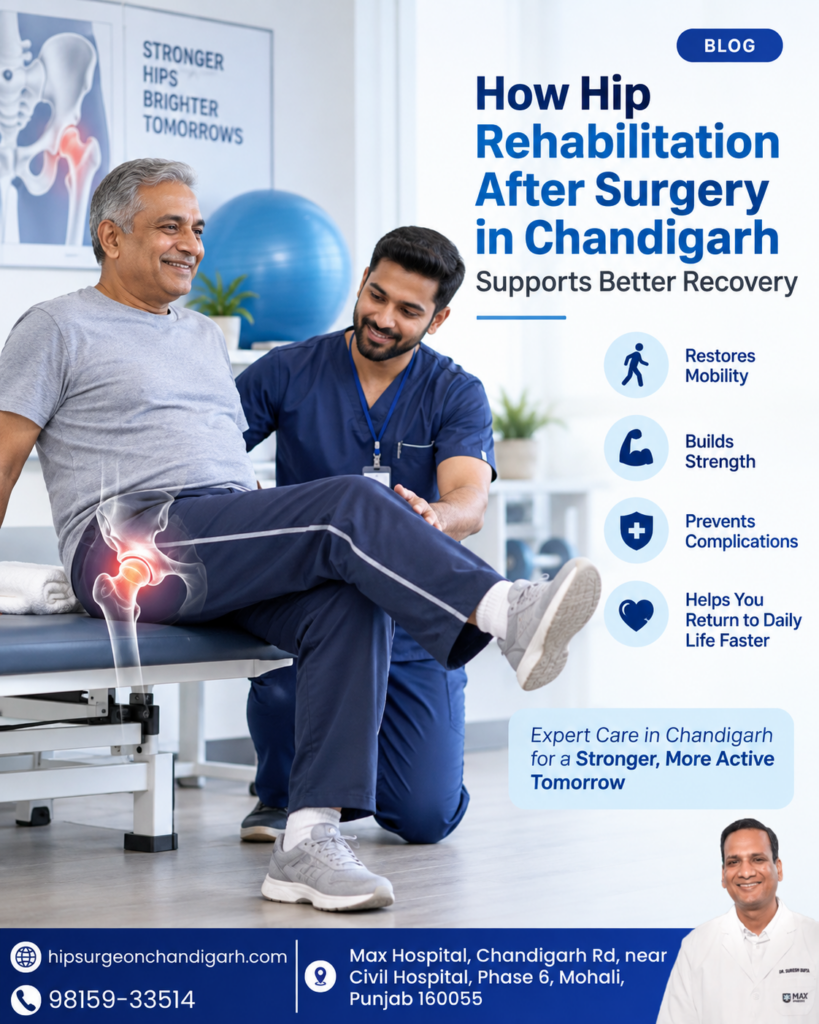
Even though hip surgery often provides patients with relief from pain and improves mobility due to the limitations caused by a joint condition, surgery does not resolve constraints on movement
Rehabilitation plays an important role in the recovery process of surgery and helps patients regain strength, movement, balance and most importantly, brings back their confidence.
For patients undergoing hip rehabilitation after surgery in Chandigarh, a framework for recovery can help bring direction to the process. Surgery type, patient’s health, surgical approach, recommendations of orthopedic surgeons and many other determining factors affect the exercises and their duration.
Why Rehabilitation is a Must Post Hip Surgery
Patients undergo hip surgery due to severe pain and limited movement, which is further exacerbated by the surgery process itself and post-surgery immobility. The surgery develops stiffness in the joints, thus limiting movement, and post-surgery patients feel less confident and less self-reliant while performing daily activities.
The end goal of rehabilitation is to establish movement. A physiotherapist designs a movement rehabilitation process that is customized to the patient’s requirements.
The movement rehabilitation process focuses on increasing hip mobility, building strength for surrounding muscles, building balance to accommodate walking aids, helping patients build the confidence for daily movement and strengthening surrounding muscles.
Rehabilitation Begins With Safe Movement
Depending on the surgery type and the patient’s condition, movement can begin a few hours after surgery. The goal of early rehabilitation is safe movement rather than intense exercise.
A physiotherapist teaches patients safe methods of getting up, standing, and walking with the required aid and how to perform daily activities. Initially, patients will need to use aids like a walker or crutches.
Your surgeon’s instructions for activity should be followed if you want to make a full recovery from your surgery. For one, patients mustn’t take it on themselves to progress exercises.
Gradually Increasing Strength
With time, patients will be expected to do strengthening exercises. This will help patients better stabilize and control movement with stronger muscles.
The exercises will focus more on the thigh and hip along with the gluteal muscles. The strength will be progressively increased.
Doing too much strengthening exercises at one time may cause pain and disrupt the healing body. For most patients, slow consistent progression of strength is much better than training at maximum strength.
Improving walking and balance
Habits of movement may change after surgery. While protecting the hip, patients may develop habits that may affect movement after surgery.
Rehabilitation will focus on improving movement toward the normal gait and resting the hip.
Balance will rest and hinge on the hip, so it is important for a rehabilitation professional to analyze walking technique and improve gait as necessary.
Hip rehabilitation after surgery Chandigarh helps patients return to their previous lifestyle. This may include advancement in rehabilitation to performing all daily routines like personal care, stair climbing, and household chores.
Patients should return to normal daily activities after the surgeon prescribes it. The Timing is patient dependent.
Managing Pain and Stiffness
During the recovery period, a certain amount of pain and stiffness is expected. The main goal of any rehabilitation program is to develop a plan that works within the patient’s pain comfort and medically imposed constraints.
Patients should contact their healthcare team without delay if pain is severe, if pain is sudden and new, or if pain is present with fever, increased redness, drainage of the surgical wound or significant swelling.
Pain that limits participation in a rehabilitation program should also be reported to the treating healthcare team.
The Hip Specialist’s Role
Hip rehabilitation programs are enhanced by surgery that is planned and coordinated with the appropriate medical care. Patients with hip problems prior to surgery should have a diagnosis and an understanding of the available treatment options.
A hip pain specialist can offer diagnosis, guidance, and treatment or referral for hip pain that persists. Treatment for the condition may include conservative therapy, physical therapy, or a combination of medication, injections, or a surgical evaluation.
Postoperative rehabilitation is a cooperative effort by an orthopedic surgeon, a physical therapist, and the patient.
Looking for Better Results from Rehabilitation? Start Here
Patients can support their rehabilitation progress by following a few basic principles:
Follow your rehabilitation plan.
Do your rehab exercises on a daily basis.
Use provided walking aids until directed not to do so by a rehabilitation team member.
Adhere to weight-bearing and movement restrictions as specified.
Eat a healthy diet and stay hydrated.
Do not miss your scheduled appointments.
Restrict yourself from high-impact activities until directive is received.
Escalating or worrisome symptoms should be reported at the first opportunity.
Why Personalised Rehabilitation Matters
Different hip surgeries affect patients in different ways. Rehabilitation for a total hip replacement is not the same as rehabilitation for a hip arthroscopy.
Your age, strength, existing health conditions, surgical technique, and goals for the surgery all affect how long it takes you to recover. Scheduling your rehabilitation based on the internet recovery timeline is not personalised enough.
A good rehabilitation professional will design a recovery plan based on how your strength and mobility progress.
Conclusion
healing the surgical site is a small part of the recovery process after hip surgery. Restoring movement, strength, balance, and confidence to perform routine activities is critical. Rehabilitation after hip surgery Chandigarh offers patients the rehabilitative process and professional guidance needed to improve mobility.
Persistent non-pain related discomfort in the hip should prompt you to seek out a specialist. Hip pain specialist Panchkula will help you figure out what is going on and will offer you the most appropriate options to relieve your discomfort.
Follow the instructions your surgeon and rehabilitation team give you. With the proper care, patience, and time, restoration of normal daily activities is safe and progressive.
NAP — Name, Address and Phone
Name: Dr. Sandeep Gupta — Hip & Knee / Orthopaedic & Joint Replacement Surgeon
Primary location: Max Super Speciality Hospital, Phase 6, Sector 65, Mohali, Punjab 160065
Panchkula consultation: House No. 222, Sector 4, Panchkula, Haryana 134112
Phone: +91 98159 33514
Email: contact@cojri.com